QuickBooks Bookkeeping Cleanup HelpThe profit the return already used
The filed year is a number someone already signed. A newer export does not replace it.
Bring the filed yearThe filed year is a number someone already signed. A newer export does not replace it.
Bring the filed yearLast year's return is the evening people still remember, the income, the expenses, and the line at the bottom. We know that kind of evening at a kitchen table. The profit and loss for that year is the plate that already left the kitchen. Pulling a fresh year to date report and calling it the same meal is how the return and the books stop talking.
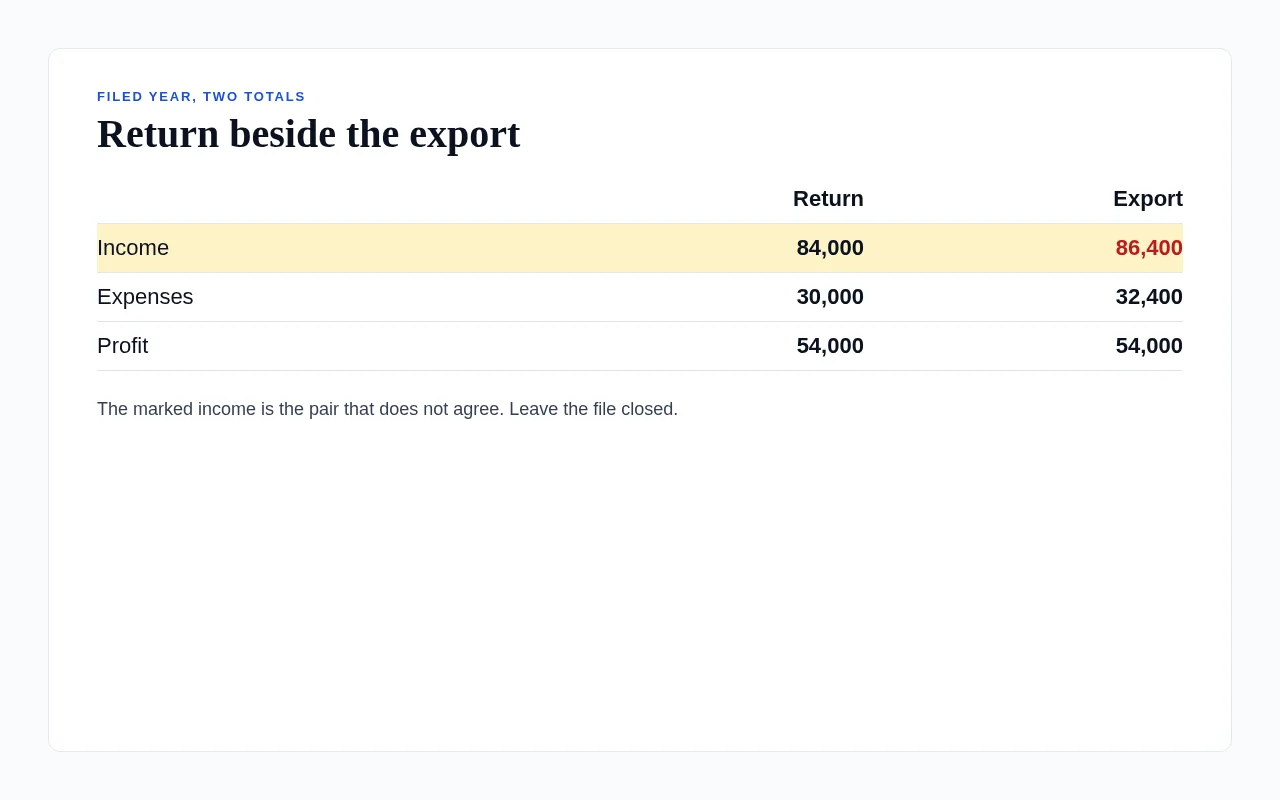
Put the export next to the return, not inside an edit. The total income, the total expenses, and the bottom line are the three figures worth circling. If they match the return, the year is a foundation. If they do not, the difference is the conversation, and it is still not a reason to recode last year tonight.
A year to date profit and loss is useful for the months that are still open. It is a poor stand-in for the year that was filed, because it includes months the return never saw. Owners send the year to date file because it is the button on the top of the report list. We would rather have the report whose dates match the return.
Draws, extra deposits, and a bill entered in the filed year after the return was prepared will move the profit. None of those clicks has to happen before we look. Export the report as it stands. If you already know a line that was added later, name the line in the note and leave it in place.
Non-business money that landed in the income account is a different problem from a slow month. A transfer from a personal account, a loan, or a refund of something that was not a sale can sit in income and make the year look stronger than it was. The report shows the account. It does not, by itself, know the story. That is why the call starts with the report and a sentence from you about anything that was not a customer.
The Tuesday picture puts this export beside the reconciliation and the statement files. Alone, the profit and loss cannot say whether March was the last true month. Together, the three reports can.
We read the return's income and the export's income as a pair. A small difference can be a classification. A large one usually means the file moved after the return, or the return was prepared from a different export. Either way, the next step is a list, not a journal entry at midnight.
If the year is the one a lender will ask about, say so. This practice does not put an assurance signature on a report. We will say that before we ask for a fourth file. The reading of the profit and loss still has a job. It tells you whether the books and the return are even in the same year.
When you are ready, pick a time and have the export where you can share the screen. The company file can stay closed.
Check the dates printed on the export before you send it. A report titled for the calendar year the return covered is the one we can pair. A report that starts in January of a later year, or that runs through today, answers a different question, and we will say so rather than force the two totals to agree.
Name the year the return covered, and say if the export is that year or a newer one.